You might think you’ve been offered a harmless “job” or been asked to do a favour for someone—but you could actually be acting as a “mule” in a criminal fraud without realising it. In this post for Fund Recovery Agency, you’ll learn how money-mule scams really work, how you may have become involved (intentionally or not), and what you can do now to protect yourself, report what’s happened, and rebuild control. You’re not alone—and this is about action, not blame.
What a Money Mule Scam Looks Like (Signs & Red Flags)
If you’re being used as a money mule—knowingly or unknowingly—there are common red flags to watch out for:
- You receive money from someone you don’t really know into your bank account or wallet, and you’re instructed to forward or withdraw it. Federal Bureau of Investigation
- You’re offered a “job” via social-media, chat apps or email that involves “processing payments,” “handling transactions,” or “transferring funds” for a good commission—with little detail. U.S. Bank
- Someone asks you to open a new bank account (in your name or as a business) and/or use your existing account for others to deposit money. LexisNexis Risk Solutions
- You’re asked to transfer funds quickly, convert them to crypto, gift cards, or send abroad. It may appear like “helping a friend.” ACFE
- There’s pressure and secrecy: “Don’t tell anyone”, “Just for a short period”, “You keep a part”. These are grooming tactics. lba.org
Recognising these signs early means you can act before things escalate.
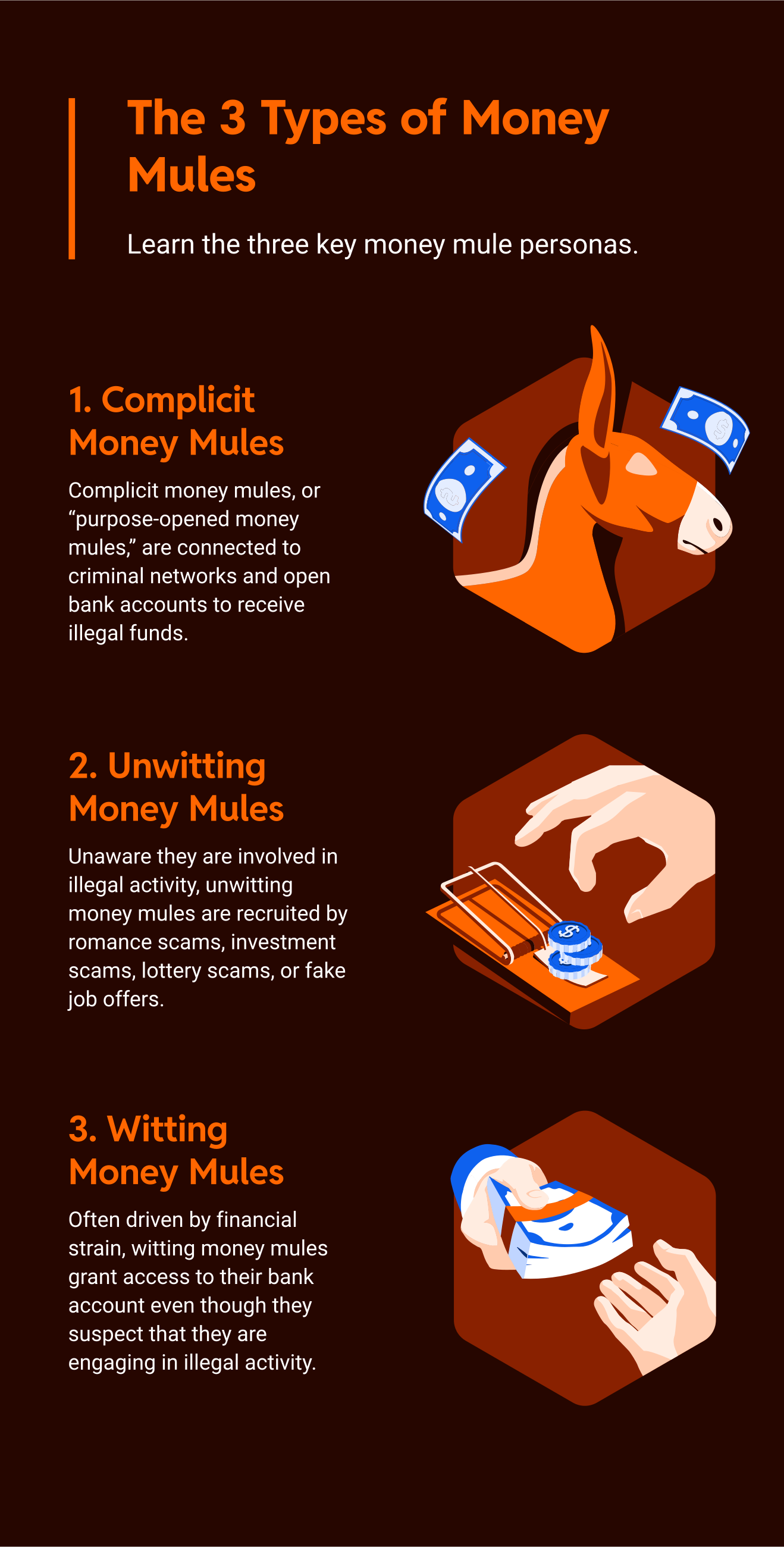
How the Money Mule Network Works (Step-by-Step)
Here’s how criminals build and use a chain of mule accounts to launder stolen money:
- Source funds – A fraudster scams victims (investment scams, romance scams, phishing, etc.).
- Recruit mules – They identify people (often young, vulnerable, job-seekers) to act as intermediaries. FF News | Fintech Finance
- Receive funds – The mule’s bank account or crypto wallet receives funds that are actually proceeds of crime. Federal Bureau of Investigation+1
- Forward funds / convert funds – The mule is told to withdraw money, buy digital assets, transfer to another country or pass on via another account. It hides the original source. ACFE
- Chain continues – These transfers may happen across multiple accounts, jurisdictions, layering the money to dodge detection. GOV.UK
- Criminals benefit – The laundered money eventually lands with criminals; the mule’s account may be flagged, and the mule may even face legal issues. The Times of India
In effect, you might think you’re doing something mundane, but you may be entangled in a crime chain.
Why Victims Get Caught in the Flow (Emotional, Financial, Social Triggers)
Emotional and social triggers
- “Easy money” promise – Especially tempting for students, job-seekers, or those under financial stress. Many believe it’s a legitimate remote job. U.S. Bank
- Trust or romance angle – Someone you believe in asks you to help, perhaps romantically or as a favour. You want to help a friend. Federal Bureau of Investigation
- Lack of awareness – You might not know “money mule” is illegal; you may think you’re helping someone or earning small commission. The Sun
- Vulnerability – Young people, people with fewer job options, those unfamiliar with financial crime laws are more at risk. FF News | Fintech Finance
Financial and practical triggers
- You may have little to lose, or the offer plays on your hope of upward mobility.
- They delay telling you the full story; initial instructions seem harmless until you’ve transferred.
- Once you’ve transferred once, it becomes easier to transfer again (sunk cost, fear).
What victims experience
- Bank account freezes, unexplained balances, unexpected contact from bank or law enforcement.
- Legal risks: You may be investigated for laundering even if you were unaware. SymphonyAI
- Emotional shock: Feeling you were used, betrayed, powerless, and exposed.
Recognising that you are not alone and this often happens innocently is vital in reducing shame and getting help.
Immediate Practical Steps If You Suspect You’re a Mule or Have Been Recruited
Here’s a checklist of what to do right away if any red flags apply:
Checklist: Immediate Action Steps
- Stop transferring money for anyone else until you have clarity.
- Contact your bank immediately and inform them you may be acting as a “mule” knowingly or unknowingly; ask to freeze or monitor your account.
- Document everything: names, chats, transaction records, amounts, bank statements, screenshots.
- Report the issue:
- In the U.S.: Federal Bureau of Investigation (FBI) or Internet Crime Complaint Center (IC3). Internet Crime Complaint Center
- In India: Contact local cybercrime cell, Enforcement Directorate (ED) for PMLA investigations. Directorate of Enforcement
- ☐ Seek independent legal or financial advice: If you already forwarded funds, you may be at risk of charges.
- ☐ Talk to someone you trust or a support professional: This is emotionally stressful; you don’t need to face it alone.
- ☐ From now on, treat any job-offer that involves your account or transferring money as highly suspicious.
Acting early can reduce damage and help you avoid further legal or financial consequences.
Longer-Term Recovery: Legal, Financial and Personal Steps
Legal recovery and risk mitigation
- Understand that even if you didn’t know, being a mule can lead to criminal investigation or civil liability for money-laundering. SymphonyAI
- Collect and retain all the documentation you gathered. Show you acted in good faith if you were unaware.
- If you’re cooperating with authorities, keep a timeline of all events: when you were approached, what you did, when you stopped.
- If you’ve already forwarded money, don’t try to “fix” it yourself by further transfers—it often worsens things.
Financial recovery and rebuilding stability
- Even if you weren’t the original victim, you have been impacted. Review your account status, check if your bank flagged you, understand any freeze or restrictions.
- Consider financial counselling: rebuild trust in your banking relationship, understand fraud risks, practise better quasi-employment diligence.
- Avoid jumping into high-risk “easy money” schemes in the aftermath; rebuilding financial stability means caution and sustainability.
Personal and emotional recovery
- Recognise the emotional impact: guilt, betrayal, fear of investigation, social stigma. This is understandable.
- Reach out: talk with someone you trust (family, friend, counsellor).
- Build awareness: Use your experience to better protect yourself and others.
- Accept that rebuilding takes time: Avoid self-blame; the recruitment of mules is sophisticated and often manipulative.
Realistic Expectations & What Recovery Means (and Doesn’t)
What recovery does mean:
- Regaining control by stopping further harm, disengaging from the scheme.
- Reducing future risk: your account is secured, your behaviour is more alert, you’ve learned.
- Possibly cooperating with authorities, clarifying your position.
- Rebuilding financial habits and employment options in legitimate ways.
What recovery doesn’t mean:
- Guaranteeing that you’ll avoid all consequences. Legal risk may remain even if you were unaware.
- Expecting a quick “reset” or “get back to normal” immediately. These things take time.
- Assuming none of your finances or reputation were affected—there may be residual cost.
- Thinking you’re entirely faultless—while you may not have knowingly committed fraud, you still used your account to receive illicit funds; recognising that is part of responsibility and recovery.
By setting realistic expectations, you can move from panic and shame into a measured plan of action.
Prevention Tips: How to Protect Yourself and Others
- Never allow someone else to use your bank account or wallet to receive or transfer funds, even if it seems like “helping a friend” or a “job”.
- Treat “remote work” job ads that involve using your account or transferring money as high risk. Ask: “Why is this job asking me to move money?” Nebraska Banking & Finance
- Be aware of romance scams: if someone you met online asks you to receive money or open accounts for them, stop and verify. Federal Bureau of Investigation
- Educate younger people (students, new employees) about money-mule risks; many mules are under 30. FF News | Fintech Finance
- Keep your banking credentials secure; don’t open accounts at someone else’s suggestion without independent verification.
- If you see an unsolicited request via social media, email or message that involves you “transferring funds” or accepting deposits—treat with suspicion.
- If you’ve been a victim of another scam (e.g., romance or crypto scam), be extra cautious: fraudsters might recruit you as a mule afterward.
Resources & Official Contacts
- Federal Bureau of Investigation (FBI) – Money Mules page. Federal Bureau of Investigation
- Commodity Futures Trading Commission (CFTC) – Advisory: Money Mules and job-seeker scams. Commodity Futures Trading Commission
- Consumer Financial Protection Bureau (CFPB) – Guide: What is a money mule? Consumer Financial Protection Bureau
- UK Government – Money Mule & Financial Exploitation Action Plan. GOV.UK
- For Indian readers: Banks, Reserve Bank of India (RBI) guidelines and local cyber-crime cells. LexisNexis Risk Solutions
If you suspect you’ve been approached to transfer money for someone else or that your account is being used as a “mule”, stop all activity today. Contact your bank, document what’s happening, and report the matter to your local authority. This isn’t about blame—it’s about taking action. You can rebuild control, and help block criminals from using you as a conduit.
Quick Actions Summary
- Stop transferring money or opening accounts for someone else.
- Call your bank and explain the possibility you are being used as a mule.
- Save all communications and transaction records.
- Report to law enforcement or relevant agency in your country.
- Talk to someone you trust and begin rebuilding with awareness and caution.